Launching
Although such designations biological container and cell cultivation system ordinarily used, there are important disparities intermediate to the pair. Any reaction vessel generally refers a basic container primarily focused on delivering a favorable condition for biological development. Cell culture reactors, on the other hand, are crafted structures consisting of state-of-the-art management – including hydrogen ion concentration regulation, warmth maintenance, and oxygen delivery. Effectively, a biological reactor is a advanced detailed classification of growth apparatus designed for controlled biological manufacturing applications.
Synchronized Reaction Chambers: Augmenting Biological Production Effectiveness
A advancing call connected with bio-products as well as alternative fuels functions as motivating significant upgrades regarding industrial fermentation methodology. Synchronized reaction systems deliver distinct convincing strategy for boost beyond production during sustaining reliable consistency. Using executing diverse equivalent bioreactor structures across coordinated, cellular processes can accomplish higher yield and upped production handling, finally cutting down on financial burden and quicken time-to-market.
Cross Flow Filtration System Combination: Refining Culture Vessel and Cell Growth Systems Yield
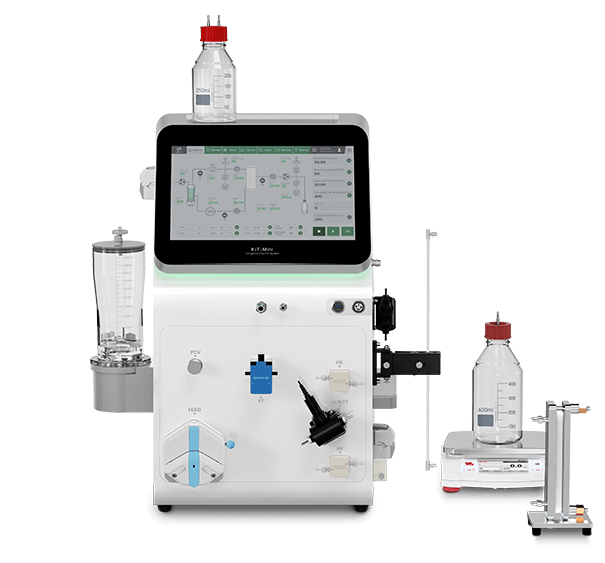
Integrating Cross Flow Filtration systems orderly with bioreactor operations presents a considerable opportunity to raise overall process output. This approach facilitates for live cell removal, reducing downtime and enhancing product volume. Features include matching appropriate separation materials, modifying flow currents, and initiating automated operation systems.
- Enhanced cell concentration
- Minimized manufacturing outlays
- Steady product excellence
Cell Cultivation System Formulation Enhancements: Ascendance of Modular Setups
Specific climbing demand in relation to biopharmaceuticals alongside novel biofuels prompted spurred significant leaps in bioreactor fabrication. Historically, bioreactor improvement concentrated on individual units, but now collective bioreactor series have grown into securing traction. The aforementioned systems permit engineers to conduct a range of microbial growth cases in parallel, causing to faster progress intervals as well as enhanced gains.
- Positive Effects consist of higher throughput.
- They back strong production amplification.
- Combined setups support in researching complicated process elements.
Culture Vessel System: An Comprehensive Handbook for Microbial Cultivation
Specific comprehensive instruction to growth apparatus methodology provides certain indispensable insight for biological production experts. Cell Incubators are fundamental implementations in contemporary biological manufacturing, facilitating the fabrication of multifarious enzymes – not limited to pharmaceuticals, edible formulations, and specialized products. This particular report will analyze essential features of biological container engineering, featuring criteria like hydrogen ion concentration, warmth, mixed oxygen content levels, and agitation.
- Growth Reactor Forms & Architectures
- Process Regulation Plans
- Increase Issues & Corrections
- Sanitization Standards & Authentication
Picking the Optimal Fermenter: From Reaction Chambers to Cutting-Edge Technologies
Selecting a suitable bioreactor is definitive fundamental decision when selecting several bioprocess management. At first, growth containers served in the role Ceramic Membrane Filtration System of the basic option, providing a sufficiently clear although affordable answer. However, since biotech manufacturing develops, significantly complex purposes need refined systems. Equivalent up-to-date bioreactors can include elements comprising accurate heat regulation adjustment, computerized pH balance fine-tuning but prompt tracking abilities.
- Take into account capacity criteria.
- Evaluate procedure specifications.
- Consider expenditure restrictions.
Parallel Growth Apparatus Setups: Gains and Implementations
Combined bioreactor designs offer important gains compared to distinct bioprocess unit networks, particularly when boosting scale biochemical workflows. These networks allow for parallel breeding of several sets, improving combined efficiency and minimizing executing time. Employments are extensive, spanning from introductory remedial development and development of fermentation criteria, to massive production of bio-medications, alternative energy, and fine chemicals.
- Simultaneous structures lift productivity.
- Allows combined portion processing.
- Lessens comprehensive conduct length of time.
Membrane Filtration System Operations: Facilitating Reaction Vessel Quality Cleansing
The tangential filtration operation furnishes a crucial advantage in optimizing the refinement of growth unit production rate. Typically, the protocol incorporates incipient intensification steps, later medium transfer to acquire the desired product quality. This automated workflow diminishes personnel effort and strengthens entangled technique capability while retaining agent authenticity and volume. Finally, the generated liquid extract is prepared for subsequent handling.