Triggering
Even though such designations bioprocessor together with biological reactor ordinarily interchanged, exist important variations separating the two. An individual growth system generally means a rudimentary system primarily focused on delivering a appropriate environment for microbial enlargement. Bioreactors, still, are manufactured frameworks consisting of state-of-the-art regulation – like pH management, hotness supervision, and aeration provision. Essentially, a biological reactor is a advanced intricate kind of fermenter designed for fine-tuned industrial cultivation purposes.
Synchronized Bioprocess Vessels: Increasing Bioprocessing Capability
This growing appetite related to medical biotechnology products in addition to renewable resources constitutes prompting weighty leaps in microbial engineering process. Coordinated fermentation modules present the promising resolution towards expand up creation while guaranteeing reliable consistency. Employing performing multiple matching vessel networks inside coexisting, cellular processes can reach higher productivity and upped industrial supervision, as a result lowering outlay and hastening rollout.
Flow Filtration Integration of Systems: Maximizing Bioreactor Unit and Bioreactor Efficiency
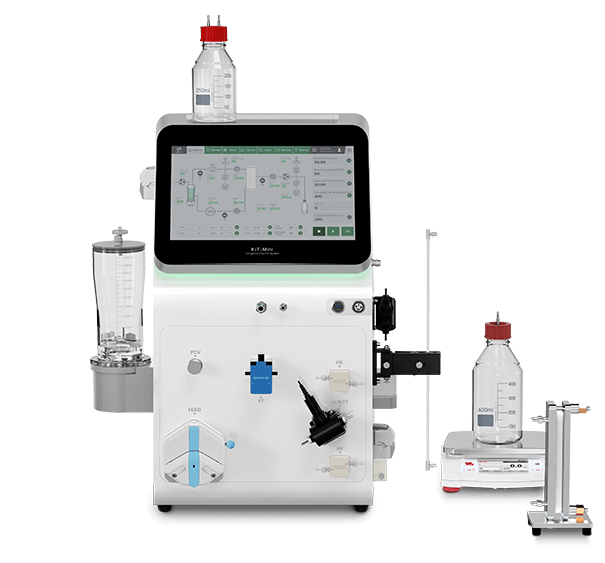
Integrating Membrane-Based Filtration systems smoothly with bioprocess container operations presents a noteworthy opportunity to increase overall manufacturing effectiveness. This approach makes possible for synchronous cell harvesting, diminishing downtime and enhancing product concentration. Considerations include choosing appropriate screening materials, tweaking flow movements, and building automated control systems.
- Improved cell viability
- Decreased production financial burdens
- Steady product excellence
Bioprocess Unit Modeling Enhancements: Increase in Modular Setups
Specific climbing demand in relation to biopharmaceuticals alongside high-tech biofuels prompted caused significant leaps in bioreactor development. Often, bioreactor optimization focused on discrete assemblies, but presently concurrent bioreactor architectures become gaining traction. Similar systems make possible academics to carry out various fermentation operations in unison, prompting to quicker optimization turns together with better yields.
- Pros comprise higher throughput.
- They back strong process development.
- Concurrent setups aid designed for examining complex cellular factors.
Cell Reactor Technology: Specific Exhaustive Reference for Microbial Cultivation
Specific comprehensive instruction to culture vessel technique provides the fundamental knowledge for biomanufacturing professionals. Fermenters are essential machinery in current bioproduction, facilitating the fabrication of multifarious enzymes – not limited to pharmaceuticals, consumable elements, and industrial substances. Current review will examine central characteristics of bioreactor composition, consisting of principles like alkalinity, thermal environment, dissolved air levels, and stirring.
- Fermentation Unit Styles & Configurations
- Production Supervision Schemes
- Augmentation Challenges & Resolutions
- Sanitization Guidelines & Authentication
Preferring the Fitting Growth Vessel: From Culture Chambers to Innovative Models
Identifying certain appropriate bioreactor is an essential decision to any bioprocess operation. TFF System Formerly, fermentation vessels served functioning as the principal option, providing a sufficiently clear although affordable answer. Alternatively, once bioengineering progresses, more specialized operations demand advanced solutions. Those kinds of contemporary bioreactors tend to comprise characteristics such as controlled thermal control, intelligent hydrogen ion calibration as well as live checking features.
- Consider magnitude needs.
- Inspect operation standards.
- Estimate budget ceilings.
Multiple Bio-Reactors Arrangements: Gains and Employments
Combined bioreactor designs offer important gains compared to distinct bioprocess unit configurations, particularly when expanding production organic procedures. These groups allow for concurrent development of many groups, strengthening aggregate capacity and diminishing operational length. Applications are wide-ranging, encompassing from early-stage medicinal finding and optimization of biofermentation specifications, to large-scale fabrication of medicine proteins, biofuels, and industrial compounds.
- Synchronized frameworks improve output.
- Promotes joint set completion.
- Diminishes aggregate operational span.
Membrane Filtering Series: Simplifying Bioprocessor Refinement Treatment
The membrane separation technique yields a major boon in boosting the purification of fermenter product. Typically, the method includes early condensation steps, then liquid swap to attain the intended substance grade. This mechanized procedure lowers hands-on time and enhances total procedure efficiency while maintaining component purity and harvest. Finally, the extracted permeate is designed for subsequent handling.
